Others have written and will write more eloquently about the life and influence of John Stott but I wanted to record a personal reflection which is (I hope) a little more thoughtful than my Facebook post in the immediate aftermath of his death last Wednesday (27th July).
I was given my first book by John Stott when I was about 13 or 14 years of age. My eldest brother gave me a copy of 'Basic Christianity' which still sits on my bookshelf. It was the first 'grown up' Christian book I ever read and it had a huge impact on my understanding of basic Christian belief. When I was a student I read 'The Contemporary Christian' where Stott explained in detail the concept of double listening that so marked his thinking. I immediately felt a sympathy for this approach which took an ancient, unchanging but always relevant Word and determined to apply it rigorously to a modern and rapidly changing world which seemed to be growing increasingly out of step with Christian faith. The practical wisdom demonstrated in its pages helped me to relate what I understood about my faith to the world in which I was called to live it out.
Other Stott books have helped me since. 'The Cross of Christ' deepened my appreciation for that awful, wonderful sacrifice of the Son of God given for my sin. His contribution to the 'Bible Speaks Today' commentary series has been a constantly helpful resource as I have struggled to develop a preaching ministry which attempts (not always successfully) to relate that ancient Word to the reality of 21st century living and serving.
His last book, 'The Radical Disciple' is a call to live out our Christian calling in every area of life from our attitude to the environment to the constant call to die to self and ultimately be prepared for our own deaths.
I only met John Stott once. I was introduced to him on the steps of Union College in Belfast and spoke with him for all of about two minutes. But that doesn't really matter because his writing meant that he became a huge influence on my life and ministry without him ever knowing it. Last year, after reading 'The Radical Disciple' I wrote him a letter to thank him for his writing. I am glad I did. It cost me very little time, effort or money to do and while I am in no doubt that he received thousands of such letters it was important for me to do it.
Along with thousands of others I will be constantly grateful to God for the life and ministry of John Stott. I admit to being saddened on hearing the news of his death to the point of shedding a tear. I was sad that such a humble, gifted, godly man was no longer among us but that sadness quickly gave way to a deeper joy that a faithful servant has received his reward and heard his Lord and Saviour say 'Well done'.
Monday, 1 August 2011

Wednesday, 13 July 2011
Time for Truth
Over ten years ago Os Guinness wrote a little book called 'Time for Truth; Living free in a world of lies, hype and spin.' This is how his book concludes; 'The West (and its lead society) are at a crossroads. In a world of lies, hype and spin, there is an urgent need for people of truth at all levels of society. There is quite simply no other way to live free. The choice is ours. So also will be the consequences.'
What choices has western society made in the intervening decade? We have seen the credibility of various institutions crumble largely because of a failure of truth. Governments, banks, churches and now the press have all been found wanting when it comes to acknowleding the truth. And we as a society have been reaping the consequences - led into a dubious war, sold a financial disaster, unwittingly protected corrupt priests and allowed journalists to do anything in pursuit of the celebrity tittle tattle we apparently can't get enough of.
Do we need any more evidence of the reality that truth itself has been consistently devalued in the western world? Instead of being valued for its own sake truth has been seen as a means to an end. If the truth will get my policies through parliament, secure my investments, keep people in my pews or sell my papers then it is of use to me. If it won't then it's not.
Furthermore, if a lie or a hype or a deception or an illegal act will get me further towards my goal than the truth will, then I will choose that instead. After all in a world where truth has lost its meaning, who cares about right and wrong? Who even knows what they mean any more?
Two thousand years ago, a politician in a small outpost of the Roman Empire with a few corrupt institutions of its own asked a cynical but profound question; 'What is truth?' What he did not know was that the man standing in front of him, bruised and battered and rejected by his own society was the very embodiment of truth. As has always been the case our relationship with the truth and our relationship with him are inextricably linked. We cannot claim to be in him and continue to give tacit acceptance to a world governed by lies, hype and spin.
So what will we do? There is only so much that direct action and protest can achieve. Lobbying the powerful is sometimes useful but in itself it carries the danger of giving into this same world of untruthfulness (the truth that serves my lobby group's aim is good but the truth which contradicts it is bad).
Surely the thing to do is to re-commit ourselves to being people of truth. We will often be inconsistent in this but when we are and our inconsistencies are pointed out we will recognise them, deal with them and thank the person who brought us up short. Even King David was eventually grateful for the ministry of Nathan the prophet because Nathan's message allowed David to become more of a man after God's own heart.
If we are going to be people of truth, the first thing we will do is recognise that everyone including ourselves is guilty. Politicians, bankers, journalists, clergy, celebrities, sports stars, business people all have the potential to lie and spin because we are all sinful. Orange and green, black and white, Tory and Labour, Christian, Jew, Muslim and atheist - we all stand condemned for not living lives of complete honesty, trustworthiness and faithfulness.
The second thing we will do is share the truth that has made a difference to us - the truth that every sinner finds grace and forgiveness in Jesus Christ. This is the truth. And this truth will set us free.
What choices has western society made in the intervening decade? We have seen the credibility of various institutions crumble largely because of a failure of truth. Governments, banks, churches and now the press have all been found wanting when it comes to acknowleding the truth. And we as a society have been reaping the consequences - led into a dubious war, sold a financial disaster, unwittingly protected corrupt priests and allowed journalists to do anything in pursuit of the celebrity tittle tattle we apparently can't get enough of.
Do we need any more evidence of the reality that truth itself has been consistently devalued in the western world? Instead of being valued for its own sake truth has been seen as a means to an end. If the truth will get my policies through parliament, secure my investments, keep people in my pews or sell my papers then it is of use to me. If it won't then it's not.
Furthermore, if a lie or a hype or a deception or an illegal act will get me further towards my goal than the truth will, then I will choose that instead. After all in a world where truth has lost its meaning, who cares about right and wrong? Who even knows what they mean any more?
Two thousand years ago, a politician in a small outpost of the Roman Empire with a few corrupt institutions of its own asked a cynical but profound question; 'What is truth?' What he did not know was that the man standing in front of him, bruised and battered and rejected by his own society was the very embodiment of truth. As has always been the case our relationship with the truth and our relationship with him are inextricably linked. We cannot claim to be in him and continue to give tacit acceptance to a world governed by lies, hype and spin.
So what will we do? There is only so much that direct action and protest can achieve. Lobbying the powerful is sometimes useful but in itself it carries the danger of giving into this same world of untruthfulness (the truth that serves my lobby group's aim is good but the truth which contradicts it is bad).
Surely the thing to do is to re-commit ourselves to being people of truth. We will often be inconsistent in this but when we are and our inconsistencies are pointed out we will recognise them, deal with them and thank the person who brought us up short. Even King David was eventually grateful for the ministry of Nathan the prophet because Nathan's message allowed David to become more of a man after God's own heart.
If we are going to be people of truth, the first thing we will do is recognise that everyone including ourselves is guilty. Politicians, bankers, journalists, clergy, celebrities, sports stars, business people all have the potential to lie and spin because we are all sinful. Orange and green, black and white, Tory and Labour, Christian, Jew, Muslim and atheist - we all stand condemned for not living lives of complete honesty, trustworthiness and faithfulness.
The second thing we will do is share the truth that has made a difference to us - the truth that every sinner finds grace and forgiveness in Jesus Christ. This is the truth. And this truth will set us free.
Monday, 20 June 2011
The Morning after...
1982 - Gerry Armstrong and Alex Higgins. 1985 - Barry McGuigan and Dennis Taylor. 2010 - Graeme McDowell. And now 2011 - Rory McIlroy. All of these are names I will remember from my lifetime as representing great sporting achievements from N. Ireland. I don't remember Mary Peters' triumph and I didn't see George Best at his peak.
Rory's achievement ranks as one of the best for me and there are a number of reasons for that. For late night/early morning drama it compares to Taylor holding his nerve to pot that final black against Steve Davis, although of course Rory's victory was a lot more comfortable than that nerve shreddng night in 1985. For the background story of coming back from that horrible final round at Augusta where we watched one of our sporting heroes come apart at the seams it was simply a joy to watch. For the recognition that some times nice guys (and Rory seems to be one of the nice guys) do come first it was very satisfying. It was both funny and emotional to see him half-apologise for not buying a Father's Day gift as he presented his dad with the US Open Golf trophy.
Maybe this one is closer to home for me as well because I grew up in the same town as Rory and went to the same school as Rory. Of course, we were a considerable number of years apart. When Rory was swinging his plastic clubs as a two year old I was doing my A-levels.
But I think that one of the reasons why this has been so tear-jerkingly enjoyable is because of the wee country that we come from. Many of those bright sporting moments that I mentioned at the beginning came in the context of some of the darkest days of our history. Rory McIlroy has known very little of the deep darkness of the Troubles in his 22 years and he represents a post-Troubles generation that are not held back by the history of this place. Many people of my generation couldn't wait to leave this place. Rory can't wait to get back. Perhaps that sums up what has changed between the time I was 22 and now.
We still have our difficulties. There is still darkness out there on our streets and the destruction of another promising young life in the murder of PC Ronan Kerr should remind us that there is still some way to go. We are at the beginning of another marching season when there is the potential for N. Ireland's name to be broadcast around the world for all the wrong reasons again. Rory McIlroy has given us a reason to be cheerful and a reason to be (in the right sense) proud. Don't let's waste it. Let's enjoy it.
I hope that over the years to come he keeps giving us those moments although none will be as emotional and wonderful as his first major victory in Maryland. Don't put him on a pedestal that he will inevitably topple off some day. Just let him be what he is - an incredibly talented sportsman, with a good attitude to victory and defeat - someone we will support and be proud of but who we won't worship or idolise.
Over the last few days people have made mention of Rory's God-given talent. Wouldn't it be great if people really meant what they said? Wouldn't it be great if those same commentators and journalists actually took a moment to say thank you to a God who gives human beings skill to invent and discover and yes, provide enjoyment to millions of others? I don't know if this is an example of God's common grace but perhaps it is and maybe we should be thankful that in the midst of a dark and difficult world we can share in some good news born and bred in 'our wee country'.
Rory's achievement ranks as one of the best for me and there are a number of reasons for that. For late night/early morning drama it compares to Taylor holding his nerve to pot that final black against Steve Davis, although of course Rory's victory was a lot more comfortable than that nerve shreddng night in 1985. For the background story of coming back from that horrible final round at Augusta where we watched one of our sporting heroes come apart at the seams it was simply a joy to watch. For the recognition that some times nice guys (and Rory seems to be one of the nice guys) do come first it was very satisfying. It was both funny and emotional to see him half-apologise for not buying a Father's Day gift as he presented his dad with the US Open Golf trophy.
Maybe this one is closer to home for me as well because I grew up in the same town as Rory and went to the same school as Rory. Of course, we were a considerable number of years apart. When Rory was swinging his plastic clubs as a two year old I was doing my A-levels.
But I think that one of the reasons why this has been so tear-jerkingly enjoyable is because of the wee country that we come from. Many of those bright sporting moments that I mentioned at the beginning came in the context of some of the darkest days of our history. Rory McIlroy has known very little of the deep darkness of the Troubles in his 22 years and he represents a post-Troubles generation that are not held back by the history of this place. Many people of my generation couldn't wait to leave this place. Rory can't wait to get back. Perhaps that sums up what has changed between the time I was 22 and now.
We still have our difficulties. There is still darkness out there on our streets and the destruction of another promising young life in the murder of PC Ronan Kerr should remind us that there is still some way to go. We are at the beginning of another marching season when there is the potential for N. Ireland's name to be broadcast around the world for all the wrong reasons again. Rory McIlroy has given us a reason to be cheerful and a reason to be (in the right sense) proud. Don't let's waste it. Let's enjoy it.
I hope that over the years to come he keeps giving us those moments although none will be as emotional and wonderful as his first major victory in Maryland. Don't put him on a pedestal that he will inevitably topple off some day. Just let him be what he is - an incredibly talented sportsman, with a good attitude to victory and defeat - someone we will support and be proud of but who we won't worship or idolise.
Over the last few days people have made mention of Rory's God-given talent. Wouldn't it be great if people really meant what they said? Wouldn't it be great if those same commentators and journalists actually took a moment to say thank you to a God who gives human beings skill to invent and discover and yes, provide enjoyment to millions of others? I don't know if this is an example of God's common grace but perhaps it is and maybe we should be thankful that in the midst of a dark and difficult world we can share in some good news born and bred in 'our wee country'.
Thursday, 9 June 2011
Thoughts at the end of General Assembly week
I have been trying to process some of my thoughts and feelings at the end of this week's General Assembly of the Presbyterian Church in Ireland. I think the best thing I can do is to state how I felt at different points and why.
On Tuesday I felt proud (in the right way I hope) to be associated with a Board of our Church (Youth and Children's) that was commended for its creativity, vision and inspiration. It has been a privilege to play a part in this board over the last seven years and it is a time which I will look back on with considerable fondness having stepped down as convener of the Resources Committee of the Board this week.
During the debate on the Presbyterian Mutual Society on Wednesday I felt grateful to God that he had brought our church through a crisis that could have so severely damaged our witness on this island. There are still lessons to be learned but there is much to be thankful to God for. Not least we Presbyterians should be thankful to God for providing us with a small group of committed and faithful people who have steered us carefully and sensitively through this difficult time.
That gratitude was replaced on the same afternoon with a feeling of real sadness as we discussed our church's response to the Church of Scotland's decison regarding the ordination of those involved in same sex relationships. I am in no doubt that the appeal which we made to the 'Kirk' to return to scriptural orthodoxy was absolutely right. I am sad that it was necessary. I firmly believe that this is not, at its heart, a matter to do with how we respond to homosexuality in the church, but rather it is about our attitude to the authority of Scripture over the church. I have said in other places that I would rather the battle over scriptural truth was being fought in another area but this is the area in which it has come to us and we must be prepared to take our stand on the life-giving word of God while still trying to work out how to reach out pastorally and missionally to those living with same-sex attraction.
I have also felt challenged this week as I have listened to that same life-giving word being preached by our moderator and three other ministers of our church. My vision of God has been enlarged. My confidence in God's infinite resources has been strengthened. My complacency when it comes to building relationships with those who are different from me has been confronted. I am grateful to all those who preached this week.
My final feeling at the end of this week is that the reformed, evangelical witness on display this week in the General Assembly can still be a real force for good and for God in this island. New challenges may face the church of the 21st century but new opportunities for mission and kingdom building are right here on our doorstep.
These are my thoughts. Those of you who weren't there or aren't Presbyterian might not be interested. Those of you who were there may have different thoughts but I hope that however you feel as you leave the assembly week behind you have a renewed confidence in the word as life for all who will hear and respond.
On Tuesday I felt proud (in the right way I hope) to be associated with a Board of our Church (Youth and Children's) that was commended for its creativity, vision and inspiration. It has been a privilege to play a part in this board over the last seven years and it is a time which I will look back on with considerable fondness having stepped down as convener of the Resources Committee of the Board this week.
During the debate on the Presbyterian Mutual Society on Wednesday I felt grateful to God that he had brought our church through a crisis that could have so severely damaged our witness on this island. There are still lessons to be learned but there is much to be thankful to God for. Not least we Presbyterians should be thankful to God for providing us with a small group of committed and faithful people who have steered us carefully and sensitively through this difficult time.
That gratitude was replaced on the same afternoon with a feeling of real sadness as we discussed our church's response to the Church of Scotland's decison regarding the ordination of those involved in same sex relationships. I am in no doubt that the appeal which we made to the 'Kirk' to return to scriptural orthodoxy was absolutely right. I am sad that it was necessary. I firmly believe that this is not, at its heart, a matter to do with how we respond to homosexuality in the church, but rather it is about our attitude to the authority of Scripture over the church. I have said in other places that I would rather the battle over scriptural truth was being fought in another area but this is the area in which it has come to us and we must be prepared to take our stand on the life-giving word of God while still trying to work out how to reach out pastorally and missionally to those living with same-sex attraction.
I have also felt challenged this week as I have listened to that same life-giving word being preached by our moderator and three other ministers of our church. My vision of God has been enlarged. My confidence in God's infinite resources has been strengthened. My complacency when it comes to building relationships with those who are different from me has been confronted. I am grateful to all those who preached this week.
My final feeling at the end of this week is that the reformed, evangelical witness on display this week in the General Assembly can still be a real force for good and for God in this island. New challenges may face the church of the 21st century but new opportunities for mission and kingdom building are right here on our doorstep.
These are my thoughts. Those of you who weren't there or aren't Presbyterian might not be interested. Those of you who were there may have different thoughts but I hope that however you feel as you leave the assembly week behind you have a renewed confidence in the word as life for all who will hear and respond.
Sunday, 8 May 2011
Dealing with evil men
Wisdom and Evil men
Proverbs 24
For many people there was confusion about how to respond to the killing of Osama bin Laden. I mentioned on my blog how I felt a mixture of relief, remembrance, sadness and confusion about what had happened. For some there was no question but that this was a cause for rejoicing and they took to the streets.
And that reaction is understandable, especially if you were in New York or Washington or Pennsylvania
But the same book then says this later on. ‘Do not gloat when your enemy falls; when he stumbles do not let your heart rejoice.’ How can those two ideas be reconciled? Don’t they contradict one another? How can they both be in the same Bible, never mind the same book of the Bible?
To understand this we need to understand a little more about the book of Proverbs. Proverbs is a collection of wise sayings, many of them attributed to Solomon. It is not telling a story like the history books or the gospels and it is not developing a argument like Paul’s letters. It is simply an anthology of wise words. These wise words have two functions.
First, some of the sayings of Proverbs simply describe the world as it is. They are a description of how life often works out. So you will find proverbs that say that lazy people won’t eat because they won’t work to earn money to buy bread. That is how things generally work out. Generally wicked people are punished and most people when they think about it will recognise that wisdom is a more enduring and fulfilling aim in life than wealth.
There are a few proverbs that simply but clearly state that life sometimes works in a way that seems wrong. So bribery sometimes works. This is not to say that bribery is right or good but simply that people who want something and are prepared to offer a bribe will sometimes get what they want. That’s life. That’s the world we live in.
But the second function of these Proverbs is to guide us so that we get the best out of life. There are some principles to follow if you want to increase your chances of living a good and fulfilled life in this world. Among those ideas are the thought that it is better to desire wisdom than to envy the wicked for what their evil has gained them. There is the encouragement to work hard so that you can feed yourself and your family. There is the warning to watch what you say so that you are not characterised as either a gossip or a liar or a flatterer.
There are long sections of the book of proverbs warning against the dangers of lust and adultery. There are also short, pithy phrases warning people against the misuse of alcohol and the dangers of drunkenness. Throughout the book there is a concern that justice is done for the poor and the weak.
I would suggest that the verse from Proverbs 11 about rejoicing over the demise of the wicked is simply a statement of the way things often are. Proverbs 24, on the other hand offers some sound advice about how to deal with enemies.
First of all we see that if you want to build something that will last you will do better to use wisdom than wickedness. Sometimes evil can achieve things quickly and spectacularly but those achievement rarely last. Wisdom leaves a legacy of understanding, knowledge and beauty behind it for those who will follow on. It may not be spectacular but it will last.
Following on from this idea is the thought that it is better to use wisdom and wise arguments out in the open than to plot and scheme behind the scenes. In our world today we generally believe that in international affairs it is better to use wise and persuasive arguments in places like the UN or the G20 or NATO or the EU than to plot and plan in secret. If you do make plans in secret without involving the rest of the world you will need wise advice in how to justify the action that you have taken.
You will still need wise words to bring to the city gate – the place where justice is done and the merits of cases decided. When President Obama gave his address on Sunday night, it was designed to make the case for the action that was taken. It was a well thought out address, delivered calmly and making the argument for bin Laden’s killing.
Proverbs 24 is also clear that when the strong use their strength they must use it wisely. They must be ready to use that strength in times of trouble but they must be willing to use it first and foremost to protect the innocent and put an end to slaughter.
While the world was caught up in the reaction to bin Laden’s death the city of Misurata in Libya Benghazi Libya
At the same time in the Syrian city of Deraa and in the suburbs of Damascus
12 If you say, But we knew nothing about this, does not he who weighs the heart perceive it? Does not he who guards your life know it? Will he not repay each person according to what he has done?
God knows how the leaders of the world react or fail to react to the death of innocents. Those in positions of power have great responsibility. They will be held accountable for the actions they have taken or refused to take. They need our prayers that they will be guided by wisdom, especially in these days.
Here we also learn that a righteous cause will prove resilient; ‘though a righteous man falls seven times, he rises again, but the wicked are brought down by calamity.’ Here we have great encouragement to continue to seek justice and righteousness in our world.
On April 4 1968, when Martin Luther King was assassinated in Memphis
We should never forget any innocents killed in conflict or terrorism. We should never forget the likes of Constable Ronan Kerr either – those who are prepared to take a stand against evil for something better. They leave us a legacy to make sure that their cause does not die with them.
But in defending the cause of the righteous we need to know how to respond to the downfall of an enemy. The front page headline of the New York Post is shocking in its hatred and triumphalism but it only echoes what so many people felt on Monday.
We need to be careful and examine our hearts. Triumphalism over a defeated enemy is problematic for us as Christians. We need to remember whose enemy we were. We were God’s enemy and he does not rejoice over our downfall, he does not celebrate when we experience judgement. Instead he sends a saviour to rescue us from that judgement and save us from that wrath. At all times we need to remember that we do not get what we deserve from God – we get grace and mercy instead.
Although acts of evil are distressing and traumatic and leave deep, deep scars they are ultimately futile. The lamp of the wicked will be snuffed out, we are told and it is entirely possible that god in his sovereign wisdom used a group of US special forces to snuff out the evil of bin Laden.
But whether justice comes in this world or the next we should know that it will come. We do not need to fret over evil men. Evil, as we discovered this morning, has been defeated by Christ at the cross. We will trust in him.
Love and Evil men
The death of Osama bin Laden well and truly took over the news headlines from the other big event last weekend – the Royal Wedding. It now almost seems forgotten in the harsh bump back down to earth that we got from events in Pakistan
But there was something that happened at the wedding that has a strange and eerie relevance for what we are thinking about tonight. During the service James Middleton, Kate’s brother read from Romans 12. It is a passage which focuses on the nature of love and it is easy to apply to two people getting married. The qualities that that chapter talks about, especially in verses 9-16, are very appropriate for a wedding day.
Qualities of love, patience, faithfulness, hospitality, empathy and humility are vital for a marriage and are equally vital in the life of the church – the situation for which Paul was writing.
But in the midst of the passage there are also some echoes of the way we, in love, need to deal with those who hate us and I want to briefly draw our attention to some of those.
In verse 14 Paul says, ‘Bless those who persecute you; bless and do not curse.’ How do we respond when people curse us? How do we react when someone makes it clear not just that they disagree with us but that they hate us and everything we stand for? What do we do when someone makes it their life’s work to destroy us and our way of life?
''So they free themselves up to play their part in the right way in the future in Northern Ireland and I think that's a prayer that I share with many other people in Northern Ireland and many people in the South (of Ireland) and many, many churches here, but we should be praying for people who are trapped in the cycle of violence and anger.''
What he is doing here is not just praying that they would stop but that they themselves would be able to have a better life than their hatred and bitterness is allowing them to have at the moment.
Is this not the same sentiment expressed by a man on a cross who, as his enemies were hammering nails into his feet and hands was praying for their forgiveness?
Then he goes on to say we should not repay evil for evil. We have seen how the cycle of tit for tat violence destroyed normal life in this society for nearly forty years. We have seen how certain people consistently refused to learn the lesson that repaying evil with evil only ever escalates the conflict.
It has yet to be seen if the violent death of bin Laden will lead to escalation but in the meantime it is vital that world powers be seen to be behaving rightly and with justice. It is vital that we do all in our power to promote and build peace in the
This doesn’t mean that we should treat evil as though it didn’t matter. Rather it means that we should not follow the desire for vengeance through to its logical conclusion. Evil deserves to be punished but because our way of doing things is too often about revenge than about justice we need to step back and leave room for God’s wrath.
Wrath and judgement can be delivered here and now through earthly structures. In Romans 13 Paul says that God has given rulers power to judge and condemn evil. But even if earthly justice fails there is a day coming when God’s wrath will fall on all evildoers.
Instead of seeking revenge we are to serve our enemies. This striking poster makes the point of love for our enemies very well. This is not an optional extra in the Christian life. This is not for the elite Christians. We are all called to love and serve our enemies as Christ loved and served us.
And there is wisdom from the book of Proverbs to back this up. Feed and water your enemy and it is more likely to bring him to repentance than any act of revenge ever will. Does he deserve to be fed and watered by you? No. Does he deserve to be punished by you? Yes. But then what did you deserve from God? Punishment. And what did you receive? Grace.
Finally, says Paul, ‘do not be overcome by evil, but overcome evil with good’. Osama bin Laden was not defeated on Sunday night when he was shot dead. He was defeated on September 11, 2001 when firefighters ran into burning and collapsing buildings to rescue people they had never met. He was defeated when hundreds of New Yorkers rushed to the scene to give medical assistance, support and blood. He was defeated when those people chose to overcome evil with good.
Evil was defeated at the cross. When Jesus refused to retaliate, when he blessed his enemies, when he died to make peace and when he served us by bearing the force of God’s wrath against our sin, he defeated evil. The cross stands as testimony to that victory. It is our victory and it will never fail.
Monday, 2 May 2011
Osama Bin Laden - how to respond?
When I got up this morning and turned on the radio it was difficult to believe what I was hearing. The man who ordered the event that has so far defined the global history of the 21st century was dead. It took some moments before I actually realised that they were talking about Bin Laden in the past tense and it will take me a lot longer to work out what my response to his death should be. Today I can only share some initial reactions.
My first response of disbelief was quickly replaced by a quiet remembrance of the lives lost nearly 10 years ago on September 11 2001. Then, if I am honest, there was a sense of relief that the man whose continuing threats have haunted so many was no longer around to be feared. That sense of relief did not last long, however, as the realisation sank in that not only are there already plenty of people prepared to take his place but that the very fact of his violent death may encourage and inspire a whole new generation of militants.
The exuberant crowds who gathered in the early hours in Washington and New York looked alarmingly similar to the crowds of Palestinians who cheered and celebrated the destruction of the World Trade Centre and I notice that in response to a Gospel Coalition blog one person who was there in the wee small hours has already wondered about whether it reflected a right response.
My mind turned to the response given by David when he learned that his arch-enemy Saul had been killed on the slopes of Mount Gilboa. Of course the situation was different. Saul was God's anointed king who David himself had refused to kill on at least two occasions. Nevertheless, you would expect David to rejoice at the death of his enemy even if that rejoicing was tempered by the death of his best friend, Jonathan. There is no such response from David. Instead there is a lament for both Saul and Jonathan. There is sadness and sorrow that it has come to this.
There will be few who will lament for Bin Laden and I don't think that it would be appropriate to lament the death of a man who caused such untold suffering for thousands of people. But neither do I think that we should rejoice. Perhaps our response should be calmly to reflect and remember and firmly to resolve to stand against evil and violence in whatever form it comes. Perhaps that reflection should be tinged with a sadness that the early 21st century seems worryingly similar to the 20th in terms of the prevalence of violence.
Maybe the right response is a lament at the state of our broken, violent world coupled with an unfailing trust in the God who judges evil and loves righteousness. Such a response is found in the middle of the book of Lamentations;
I remember my affliction and my wandering, the bitterness and the gall.
I well remember them, and my soul is downcast within me.
Yet this I call to mind and therefore I have hope:
Because of the LORD's great love we are not consumed, for his compassions never fail.
They are new every morning; great is your faithfulness.
I say to myself, The LORD is my portion; therefore I will wait for him.
I do not have hope because my enemy is dead. I do not have hope because my country is greater and stronger than yours. I have hope because of the everlasting compassion, love and faithfulness of God. I do not need victory over my enemies. I do not need vengeance or even the guarantee of earthly justice being done to the likes of Bin Laden. The LORD is my portion. He is enough. I will wait for Him.
My first response of disbelief was quickly replaced by a quiet remembrance of the lives lost nearly 10 years ago on September 11 2001. Then, if I am honest, there was a sense of relief that the man whose continuing threats have haunted so many was no longer around to be feared. That sense of relief did not last long, however, as the realisation sank in that not only are there already plenty of people prepared to take his place but that the very fact of his violent death may encourage and inspire a whole new generation of militants.
The exuberant crowds who gathered in the early hours in Washington and New York looked alarmingly similar to the crowds of Palestinians who cheered and celebrated the destruction of the World Trade Centre and I notice that in response to a Gospel Coalition blog one person who was there in the wee small hours has already wondered about whether it reflected a right response.
My mind turned to the response given by David when he learned that his arch-enemy Saul had been killed on the slopes of Mount Gilboa. Of course the situation was different. Saul was God's anointed king who David himself had refused to kill on at least two occasions. Nevertheless, you would expect David to rejoice at the death of his enemy even if that rejoicing was tempered by the death of his best friend, Jonathan. There is no such response from David. Instead there is a lament for both Saul and Jonathan. There is sadness and sorrow that it has come to this.
There will be few who will lament for Bin Laden and I don't think that it would be appropriate to lament the death of a man who caused such untold suffering for thousands of people. But neither do I think that we should rejoice. Perhaps our response should be calmly to reflect and remember and firmly to resolve to stand against evil and violence in whatever form it comes. Perhaps that reflection should be tinged with a sadness that the early 21st century seems worryingly similar to the 20th in terms of the prevalence of violence.
Maybe the right response is a lament at the state of our broken, violent world coupled with an unfailing trust in the God who judges evil and loves righteousness. Such a response is found in the middle of the book of Lamentations;
I remember my affliction and my wandering, the bitterness and the gall.
I well remember them, and my soul is downcast within me.
Yet this I call to mind and therefore I have hope:
Because of the LORD's great love we are not consumed, for his compassions never fail.
They are new every morning; great is your faithfulness.
I say to myself, The LORD is my portion; therefore I will wait for him.
I do not have hope because my enemy is dead. I do not have hope because my country is greater and stronger than yours. I have hope because of the everlasting compassion, love and faithfulness of God. I do not need victory over my enemies. I do not need vengeance or even the guarantee of earthly justice being done to the likes of Bin Laden. The LORD is my portion. He is enough. I will wait for Him.
Friday, 15 April 2011
Rediscovering the only story that really matters - a review of King's Cross by Tim Keller
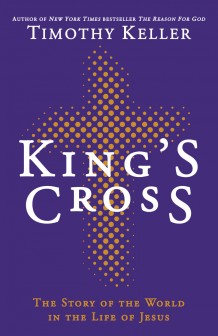
Keller's central idea in the book is that if the account given of Jesus' life, death and resurrection in the gospels is true, then it is the only story that really matters. It is the only story that makes sense of our humanity, our history and our destiny. He chooses to focus on the gospel of Mark because of its immediacy and up front statement of its purposes:
'In his very first sentence Mark tells us that God has broken into history. His style communicates a sense of crisis, that the status quo has been ruptured. We can't think of history as a closed system any more. We can't think of any human system or tradition or authority as inevitable or absolute any more. Jesus has come; anything can happen now.'
Keller goes on to divide his book into two halves, focussing on the themes contained in the two halves of Mark's gospel - the identity of Jesus (chapters 1-8) and the purpose of Jesus (chapters 9-16) - the King and the Cross.
Keller's style of writing is logical and well worked out but burning with a deep love for his subject. The result is a book which, after reading one chapter you realise that in your heart you always knew this about Jesus or the gospel but you have perhaps not heard it expressed in quite this way. To give an example Keller discusses the difference in between Christianity and religion in this way; religion, says Keller, is essentially 'advice on how you must live to earn your way to God. Your job is to follow that advice to the best of your ability.' By contrast the gospel isn't advice. It is news - good news that Jesus has already done all that is needed and offers us favour with God as a free gift of grace. 'The gospel is not about choosing to follow advice. It is about being called to follow a King.' This gospel becomes an offence to both religion and irreligon, both Jerusalem and Rome because it cannot be co-opted by either but stands as a challenge to both.
We are encouraged throughout the first half of the book to identify with the walk-on characters who encounter Jesus and have their lives changed as a result - the paralysed man, Jairus and the character who stands out for me, the Syro-Phoenician woman in Mark chapter 7. In Keller's discussion of this woman he carefully draws out the importance of how we respond to the gospel. We must be humble enough to recognise that we do not deserve anything from God's table but not so self-absorbed that we fail to accept the offer of undeserved grace he makes.
As he turns our attention towards the cross, Keller shows why Jesus' death is different from any other. As Jesus contemplates 'the cup' in the garden of Gethsemane the point is driven homw that it is the experience of God's righteous judgement against sin that Jesus is anticipating and dreading. It is the thought of this rupture taking place at the heart of the central relationship in the universe that makes the cross so dreadful. He contrasts Jesus' 'loudest desires' at that moment - to be free of the cup that is coming - with the 'deepest desires' of his heart from eternity - to save us. 'Jesus doesn't deny his emotions, and he doesn't avoid the suffering. He loves into the suffering. In the midst of his suffering, he obeys for the love of the Father - and for the love of us.'
As we come to the cross itself Keller offers us the picture of Jesus experiencing the deep darkness, isolation and disintegration that our sinful rebellion is taking us towards and doing it out of love. 'If you see Jesus losing the infinite love of his Father out of love for you, it will melt your hardness. No matter who you are it will open your eyes and shatter your darkness. You will at long last be able to turn away from all those other things that are dominating your life, addicting you, drawing you away from God. Jesus Christ's darkness can dispel and destroy our own, so that in the place of hardness and darkness and death we have tenderness and light and life.'
I remember being told that if people walk out of a church service and are discussing what a wonderful preacher they have just heard, then that preacher has failed. On the other hand if they are walking out discussing what a great Saviour they have, the preacher has done his job. Reading King's Cross along with Mark's gospel will give you a deeper appreciation of your Saviour. Read it and pass it on to someone who wants to know why Jesus is so important to you.
Subscribe to:
Posts (Atom)